
Chinese AI Stocks Shed $2.4 Trillion as US Rivalry and Weak Demand Bite
Beijing's state-backed investment fund failed to halt a 40% drop in tech indices, driven by consumer hesitation and threats from Washington.
By James Mitchell ·
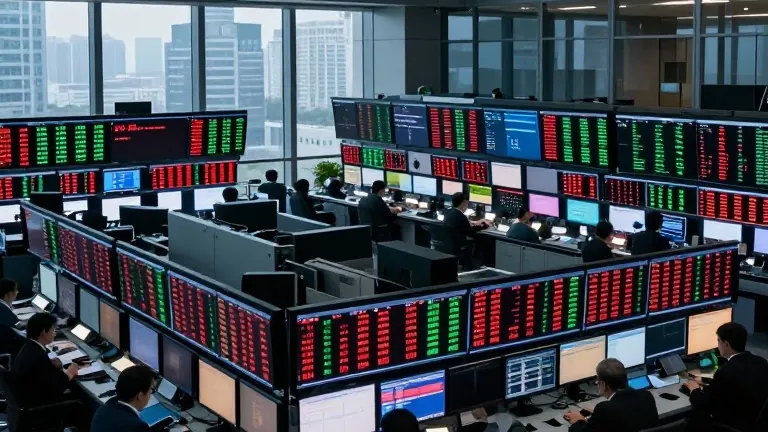
Chinese technology shares have lost $2.4 trillion in value since May, a sharp decline that exposes the tension between Beijing's aggressive AI ambitions and the domestic economy's inability to support them. The market turmoil stems from a combination of weak consumer spending, rising US interest rates, and growing fears about Western trade restrictions.
The STAR 50 Index, which tracks innovation firms on the Shanghai stock exchange, has fallen 40% since June. Broader indices of major companies dropped by approximately 20% during the same period. According to Bloomberg, this precipitous drop removed $2.4 trillion from the Chinese stock market. Goldman Sachs notes that AI stocks represent more than 40% of total market value in China and Hong Kong, meaning any erosion in that sector sends shockwaves through the entire domestic market.
Beijing has poured resources into the sector, launching a 60 billion yuan state-backed AI investment fund that began deploying capital to domestic developers this month. Despite this heavy government spending, Chinese consumers remain reluctant to spend on technology. This hesitation prevents many tech firms from turning a profit, creating a gap between the government's strategic goals and corporate financial realities.
Dan Wang, China director for the Eurasia Group, attributed the sell-off to a "general anxiety" among tech companies. She stated that profit margins are worse than expected, US rates are rising, and domestic demand is weak. Wang noted that companies are uncertain whether the state-backed model can succeed when consumers are not buying.
External pressures from the United States are compounding domestic issues. Washington has banned Chinese humanoid robots, citing national security risks, and is reportedly considering a ban on Chinese components in data centers. China relies heavily on exports, so these restrictions hurt domestic firms that already struggle to sell enough products at home. The US also races to pull ahead in AI, with Beijing doubling down on robotics, or embodied AI, as a way to address demographic challenges like an aging population.
Demand for robotics currently comes primarily from government agencies and research institutions rather than everyday consumers. Products like humanoid robots and robotic dogs are popular in entertainment but remain too expensive and impractical for home use. Shares in Unitree, China's leading robot manufacturer, have halved since they began trading in August. Wang said it does not look like embodied intelligence will generate profits in the mass market anytime soon.
Policymakers face a difficult choice regarding stimulus. China has restricted overseas investment in recent months, with new regulations taking effect on December 1, in an effort to keep capital domestic. However, these moves have not yet triggered greater investment in Chinese markets. Wang warned that any new stimulus would be "high risk" because officials are held accountable if policies fail.
This week, top Chinese Communist Party officials are gathering for the fifth plenum to prepare for the 21st Party Congress. The Congress is expected to anoint Xi Jinping for a fourth term. With this politically sensitive period approaching, there is little appetite for risky policy measures, even if they could boost the economy. No major stimulus packages are expected to be announced before the meeting concludes.
Globally, the AI boom is expected to last at least another year. On Monday, US AI company Anthropic filed paperwork for an initial public offering that could raise as much as $100 billion, potentially the largest stock market debut in history. China has no comparable blockbuster IPOs on the horizon, leaving its tech sector exposed to continued volatility.
Source: The Guardian
More Business · Buyer Beware · Report a business · Got a Story?