Students Cut School Cafeteria Waste by 33% With Compost Bins and Share Tables
Lovin Elementary in Georgia now diverts 100 pounds of food waste weekly, a strategy being adopted by districts nationwide to save money and reduce landfill methane.
By Sofia Ramirez ·
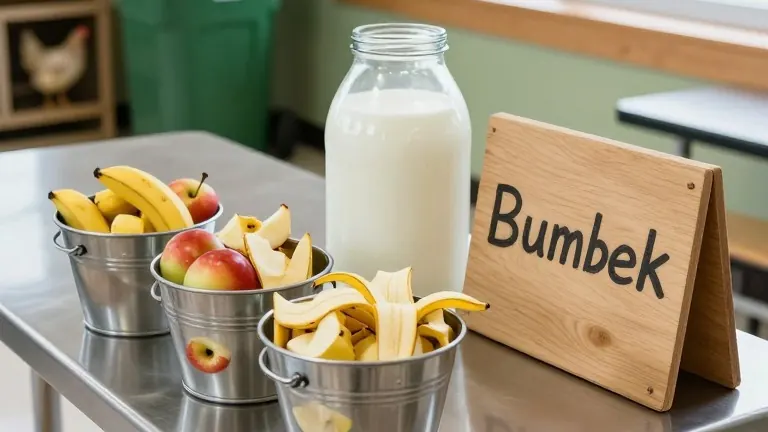
Lovin Elementary in Lawrenceville, Georgia, now diverts approximately 100 pounds of produce waste from landfills each week. The school achieves this by having students sort leftovers into buckets for an outdoor compost bin and a vermicomposting system. This local effort reflects a national trend where schools are actively reducing cafeteria waste through student-led initiatives.
In 2018, school staff conducted a food audit that revealed 589 pounds of discarded food during a single two-hour lunch period. Of that total, 120 pounds consisted of recoverable items such as unopened milk and fruit. Following this initial assessment, the school introduced a designated share table and refrigerator for unclaimed food. Subsequent audits showed that cafeteria waste dropped by nearly one third within months of implementing these changes.
Gerin Hennebaul, who leads agriculture and science initiatives at Lovin, noted that the program expanded in fall 2021 when the school received a grant for on-site composting. Students now weigh their scraps before placing them in bins. As the volume of material increased, the school built worm bins and began sharing excess waste with Creative Enterprises, a local nonprofit that uses the compost for its garden. Unclaimed items from the share table are moved to the school's food pantry for community members.
Aissatou Brown, a student at Lovin, described the change in the cafeteria environment. She stated that there is less waste in the trash and fewer scraps on the floor. Brown said the process makes the students feel like they are saving the planet. Hennebaul added that the cafeteria has become an extension of the classroom, with students reporting that they have started composting and building chicken coops at their homes.
Baltimore City Public Schools serves more than 76,000 students and has adopted similar strategies. The district operates a 33-acre learning farm to teach students about food production. Anne Rosenthal, a farm-to-school specialist for the district, explained that hands-on experience helps students value healthy options. Many schools in the district now feature share tables and composting programs.
The World Wildlife Fund’s Food Waste Warriors program has assisted more than 1,000 schools in these efforts. In 2019, the organization estimated that U.S. schools waste about 530,000 tons of food annually, a cost of $1.7 billion. Carmen Byker Shanks, director of scientific strategy at the Center for Nutrition and Health Impact, said that involving students in finding solutions leads to successful interventions. She noted that reducing waste supports student learning by helping them eat more of their meals.
Federal guidelines from the Agriculture Department provide resources for schools to conduct waste audits and create share tables. A department spokesperson said in an email that schools should also reassess how they purchase and prepare food. Pete Pearson, a vice president at the World Wildlife Fund, stated that involving students in the process is essential to making these changes stick.