Ten Nations Link French Nuclear Jets to European Defense Grid
Paris is building new infrastructure and communication links with allies to prepare Rafale fighters for forward deployment across the continent.
By Sofia Ramirez ·
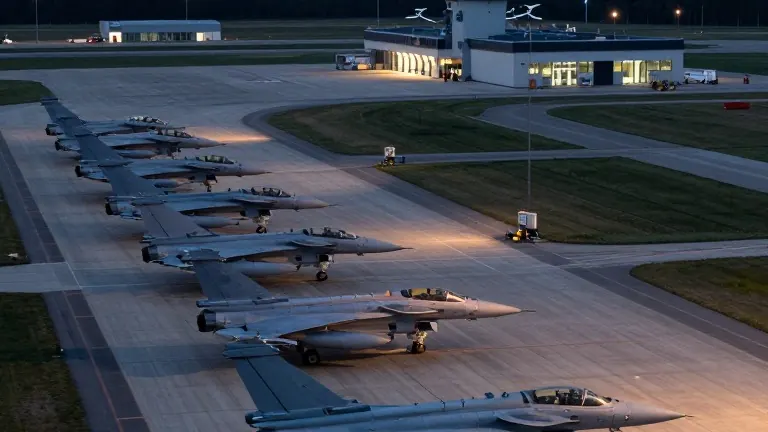
France is integrating ten European nations into a nuclear deterrence framework that includes deploying Rafale fighter jets across the continent, according to a Monday report by The Wall Street Journal. The initiative, termed forward deterrence, involves constructing new infrastructure, establishing early-warning systems, and creating intelligence-sharing channels. The move aims to reinforce Europe's defensive posture against Russian aggression as trust in American security guarantees weakens.
The coalition includes the United Kingdom, Germany, Poland, the Netherlands, Belgium, Finland, Norway, Sweden, and Denmark. These countries joined the project in stages following President Emmanuel Macron's announcement in March. While the scope varies by nation, the core goal is to embed French nuclear capabilities within the European command structure. The arrangement allows these states to participate in French deterrence efforts, a role a European government minister compared to their existing relationship with the United States.
Finnish President Alexander Stubb clarified that his country does not plan to host nuclear weapons on its soil during peacetime. Instead, Finland seeks to create a strategic dilemma for Russia by gaining access to information and participating in the process. Stubb described the integration as a long-term effort, estimating it will take ten to fifteen years to fully mature. He emphasized that the current goal is to involve Finland in the information flow rather than to deploy hardware.
France has negotiated these agreements through bilateral talks rather than multilateral summits. This approach has forced European partners to maintain constant contact to compare what Paris has communicated to each state. Senior defense officials noted that this fragmented process has increased the need for coordination among the allies. The structure of the talks reflects a desire to manage political sensitivities within France.
The push for a stronger European nuclear role coincides with growing doubts about American reliability. Tensions have risen as President Donald Trump pursues energy deals with Russian President Vladimir Putin and applies pressure on Ukraine. European officials question whether Washington would risk a nuclear conflict to defend a continental ally. French advisers argue that Paris offers a more credible deterrent because it shares geography and economic continuity with its neighbors.
Macron's adviser Chatel stated at the Warsaw Security Conference that France is part of the same continent as its allies. Macron himself has argued that the survival of closest partners directly affects French vital interests. Norwegian Foreign Minister Espen Barth Eide added that the new plan supplements existing US nuclear guarantees rather than replacing them.
France announced it will resume nuclear production for the first time in decades and will classify the size of its stockpile. The nuclear force will remain under exclusive French control. This structure was selected to make the strategy acceptable across the French political spectrum. The plan is designed to remain viable even if Marine Le Pen's far-right party wins the presidential elections scheduled for next spring.
Source: The Jerusalem Post