Baghdad opens first museum dedicated to Jewish heritage
The Shamash Jewish Museum opened in central Baghdad, displaying artifacts and documents from a community that once numbered over 100,000 in the country.
By Michael Bennett ·
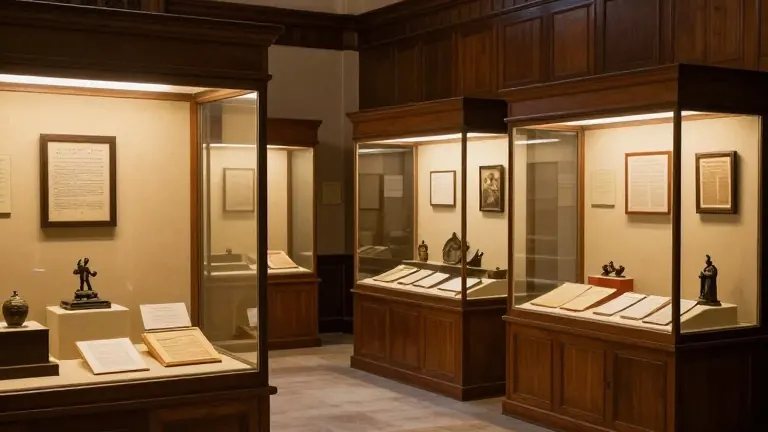
A new museum dedicated to the history of Iraq's Jewish community opened in Baghdad.
The Shamash Jewish Museum is located on al-Rashid street in the center of the capital. It is the first facility in the country dedicated entirely to documenting the Jewish presence in Iraq. The building previously housed the Shamash School, which was founded in 1928 to serve the local Jewish population.
The museum displays religious items, historical papers, and video recordings of interviews with former Iraqi Jews. Exhibits include a Hanukkah menorah, a kippah, and a prayer shawl. The walls feature photographs of prominent figures such as Sassoon Eskell, who served as Iraq's first finance minister, and physician Dhafer Fouad Eliyahu.
Ammar al-Tamimi, a lawyer for the committee of Iraqi Jews that manages community properties, confirmed the museum's status to AFP. "It's the only museum in Iraq belonging to the Jewish community," he said. Tamimi indicated in an interview with the Saudi Al Hadath channel that local authorities approved the project. He noted that the Jewish endowment has existed in Iraq for years and remained under administration even after most members of the community emigrated.
The identities of the individuals behind the restoration and the extent of official government support remain unclear. The Iraqi government has issued no official announcement regarding the opening, and the national news agency has not reported on it. JIMENA, an American organization focused on preserving Jewish heritage, stated that it met with Iraqi leaders in early October to observe the restoration work. The group withheld specific details about the individuals involved in Iraq due to safety concerns.
Iraq was home to more than 100,000 Jews in the early 20th century, a group that constituted roughly a quarter of Baghdad's population. Antisemitism grew over the decades, culminating in the Farhud pogrom of 1941. Following the establishment of Israel in 1948, the majority of Iraqi Jews fled the country, with most resettling in Israel. Yitzhak Horowitz, who visited Baghdad under an assumed identity, told Channel 14 that only five or six Jews remain in the city today.
The Shamash school property was confiscated by the government in the 1970s and converted into a public school. A court ruling in 1992 returned the property to the Jewish community. Efforts to revive the school were interrupted by sanctions in the 1990s, the US invasion of 2003, sectarian clashes in 2006 and 2007, and the rise of the Islamic State group between 2014 and 2017.
The museum has welcomed dozens of local and foreign visitors since opening. Ramzi al-Saadi, a 74-year-old Iraqi visitor, recalled his Jewish neighbors from his childhood on al-Kifah Street. "They were kind, simple people who never harmed anyone," he told AFP. The opening follows the restoration of the tomb of Rabbi Isaac Gaon in Baghdad in November 2025, a project funded by the Jewish community for $150,000. Fewer than 50 synagogues and Jewish sites currently remain in Iraq, most located in Baghdad and Hilla.