Cyprus deepens US military ties as ambassador vows protection
New plans for expanded American air and naval operations on the island mark a departure from decades of nonalignment and close Russian cooperation.
By Sofia Ramirez ·
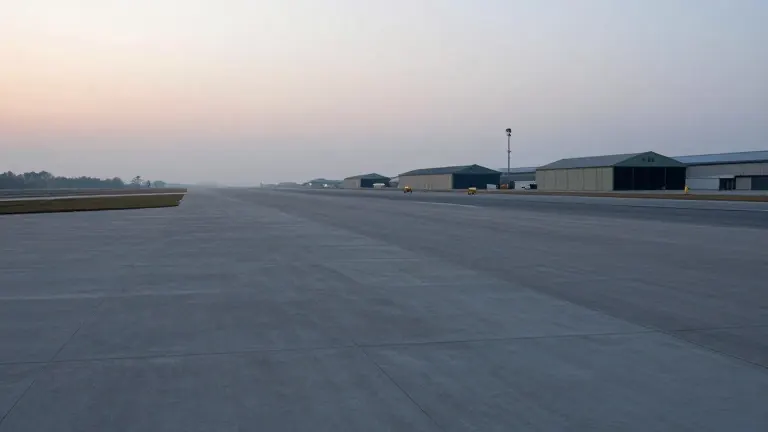
John Breslow, the new US ambassador to Cyprus, stated in an October 4 interview that the United States will protect the island nation in the future. While the remark is not a formal security guarantee, it signals a tangible shift in the geopolitical posture of a country that has historically balanced relations between Moscow and Washington. The assurance accompanies concrete plans to upgrade the Andreas Papandreou Air Base in Paphos to handle large US military transport aircraft, increase the frequency of US warship visits, and expand joint military activities.
Cyprus gained independence from the United Kingdom in 1960 and joined the Non-Aligned Movement in 1961. Under President Makarios III, the country sought to maintain close ties with the Soviet Union without severing connections to the West. This strategy persisted after Cyprus joined the European Union in 2004. Relations with the United States remained strained by the 1974 Turkish invasion, during which the US prioritized its alliance with Turkey over decisive action against Ankara. This position led to a violent demonstration in Nicosia on August 19, 1974, where US Ambassador Roger Davies was shot dead.
Mistrust deepened in 1987 when Washington imposed an arms embargo on the Republic of Cyprus to prevent an arms race on the island. The embargo forced the Cypriot National Guard to rely on Russian weapons systems. When Russia annexed Crimea in 2014, the Cypriot government expressed reservations about tougher EU sanctions, with then-Foreign Minister Ioannis Kasoulides warning of devastating economic consequences. In February 2015, President Nicos Anastasiades visited Moscow and signed agreements with Vladimir Putin, including a naval cooperation memorandum and more favorable repayment terms for a €2.5 billion loan.
The trajectory changed with Russia's full-scale invasion of Ukraine in February 2022. Konstantinos Adamides, an associate professor of international relations at the University of Nicosia, noted that the invasion accelerated a shift toward the West. He observed that Cyprus openly chose to side with the Western bloc despite the economic costs of breaking with Moscow. The government aligned with EU sanctions and worked to convince Washington that Cyprus could serve as a reliable partner in the Eastern Mediterranean.
Bilateral security cooperation gained institutional footing with a statement of intent signed in 2018. In April 2022, the US-funded Cyprus Center for Land, Open-seas and Port Security opened in Larnaca. The facility provides training for regional security personnel in port security, counterterrorism, and hazardous materials trafficking. A major step followed in September 2022 when Washington suspended the 1987 arms embargo, allowing for the export of lethal military equipment subject to approvals. This suspension has been renewed until September 30, 2027.
Cyprus is not a NATO member, a status complicated by Turkey’s position. President Nikos Christodoulides stated that the country is preparing for potential membership at the military and administrative levels. He said Cyprus would apply to join the alliance immediately if possible, noting that political conditions are not yet met due to Turkey's stance. The country is also modernizing its armed forces to reduce dependence on Russian T-80 tanks and Tor-M1 and Buk air defense systems. Sanctions against Moscow have made it difficult to secure spare parts for these systems.
In January 2025, former President Joe Biden authorized Cyprus to participate in US defense procurement programs, including Foreign Military Sales and Excess Defense Articles. This decision granted Nicosia access to additional mechanisms for acquiring American military equipment. The expanded partnership reflects a strategic reorientation that moves the island away from its historical reliance on Russian military hardware and toward a deeper integration with US defense structures in the region.