European airlines and broadcasters face renewed wave of bomb threats
At least 32 flights were affected this week as security officials in Prague, Dublin, and Sofia scrambled to verify reports of suspicious devices.
By Michael Bennett ·
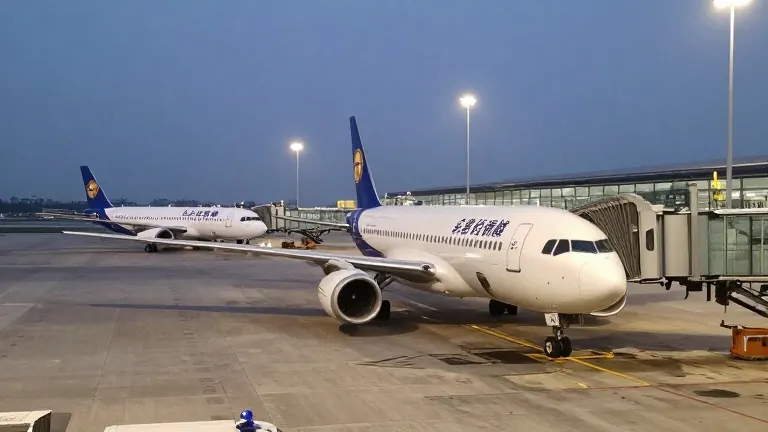
European aviation and media sectors faced a renewed series of bomb threats on Friday, marking the latest disruption in a week of security alerts across the continent.
Apostolos Tzitzikostas, the European Union's transportation commissioner, reported that 11 new threats were issued on Friday. This followed 14 threats on Thursday and seven on Tuesday, according to data from Eurocontrol, the European air traffic authority. In total, the threats affected 32 flights over the three-day period. No suspicious items were found, and no injuries were reported.
The disruptions were concentrated in specific hubs. Nine of the affected flights originated from or were destined for Václav Havel Airport in Prague, according to airport spokesperson Denisa Hejtmánková. The Czech capital saw threats against flights to Cyprus, Italy, and Romania. In Hungary, defense minister Romulusz Ruszin-Szendi announced that fighter jets escorted three passenger planes through the country's airspace on Friday. The aircraft, flying from Brussels to Sofia and from Prague to Cyprus and Romania, received threats within an hour of each other.
French authorities confirmed four bomb threats against aircraft flying over France. The planes landed safely at Paris' Orly Airport, where bomb disposal experts conducted inspections. Other affected carriers included Romanian airline Tarom, which faced a threat on a Prague-to-Bucharest route, and Ryanair, which had a flight from Lisbon to Rome. A WizzAir flight from Prague to Rome was diverted to Venice, and passengers evacuated the aircraft after it landed.
The threats extended beyond the skies to broadcast facilities. In Dublin, the headquarters of national broadcaster RTE was evacuated on Friday due to a bomb threat. Live broadcasts were replaced with prerecorded programs for several hours until police with sniffer dogs cleared the building. Irish Prime Minister Micheál Martin described the incident as evidence that unconventional activities can cause fear and anxiety. He stated that a major security operation would be in place next week when Dublin hosts European Political Community and EU leader meetings.
In the United Kingdom, broadcaster Sky confirmed it received a security threat. The company said it was working with authorities to secure its operations, and Sky News remained on air. In Bulgaria, private broadcaster NOVA TV received an email on Friday claiming responsibility for the air traffic threats. The station said it implemented standard safety measures without interrupting its TV and radio broadcasts.
Eurocontrol stated that the threats caused minimal disruption to overall aviation, noting that the 14 flights affected on Thursday represented only 0.05% of the nearly 26,300 flights in the European network that day. However, Robert Jordan, research director at Britain's Royal United Services Institute, noted that airlines maintain a very low risk appetite for security issues. He said secure messaging apps have increased the anonymity available to those issuing threats, making the task of verification more complex for safety teams.
Authorities have not attributed the threats to a specific group or state actor. An email sent to Rome airport authorities on Thursday, which was reviewed by The Associated Press, purported to come from a group describing itself as anti-feminist and targeting a feminist regime. Another European airport received a threat with similar wording, though it is unclear if it came from the same sender. Italian Premier Giorgia Meloni said the recent cyberattacks and bomb threats suggest civilian infrastructure is under attack, though she noted it is not yet possible to say if all events are connected.
Paul Reuter, vice president of the European Cockpit Association, said pilots are prepared to respond professionally to the threats. He noted that crews review diversion procedures and may carry extra fuel. Reuter called the use of civil aviation for geopolitical disruption or hoaxes totally unacceptable. Security experts are scheduled to meet in Brussels next week to discuss measures to address the ongoing threats.
Torstein Nymoen, a Norwegian traveler at Prague airport, said the situation must cost aviation companies a significant amount of money. He described the incidents as sad, noting that they create unnecessary tension for crews and passengers alike.