Netanyahu and Eisenkot Face Off in Close Israeli Vote
Polling puts the prime minister and his rival within striking distance, setting the stage for complex coalition talks amid security concerns.
By Michael Bennett ·
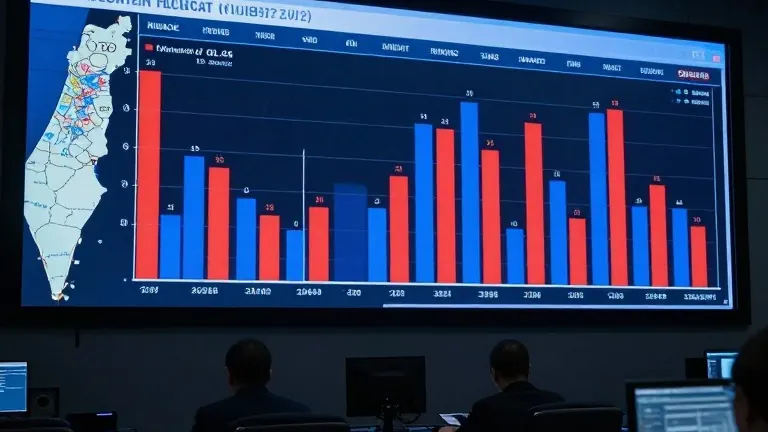
Benjamin Netanyahu and Gadi Eisenkot are competing for the Israeli premiership in an election that has drawn intense scrutiny over national security and democratic norms. Polling data released on Friday indicated that the incumbent prime minister and the former military chief are nearly tied in the race. The contest is viewed by analysts as one of the most consequential in the nation's history.
Neither candidate is projected to secure the 61 seats needed for a majority in the Knesset. This outcome suggests that negotiations for a coalition government could last for weeks or even months. Israel's proportional representation system frequently results in such complex bargaining periods, often producing unexpected alliances among diverse political groups.
Security concerns have dominated the campaign narrative. Opposition parties have criticized Netanyahu for the intelligence and military failures that preceded the October 7 attacks by Hamas. That assault resulted in the deaths of nearly 1,200 people and the capture of 251 hostages who were taken to Gaza. The opposition demands an independent commission of inquiry, a measure Netanyahu has resisted for years, claiming such a body would be biased against him.
Netanyahu has positioned himself as the defender of Israel's security, citing strategic victories in regional conflicts and his close relationship with US President Donald Trump. Eisenkot leads the Yashar Party, which is the central component of a change bloc aimed at removing Netanyahu from power. This coalition includes Naftali Bennett and Avigdor Lieberman, both right-wing leaders with hardline security views, as well as Yair Golan, a left-leaning former general. Netanyahu must now rebuild his alliance with far-right and ultra-Orthodox parties to maintain his grip on power.
Critics have also focused on allegations regarding threats to democratic institutions. Netanyahu faces corruption charges, which he denies, and continues to push for judicial reforms that sparked widespread protests before the October 7 attacks. The issue of conscripting ultra-Orthodox men has also become a focal point after the government failed to enforce a Supreme Court ruling on the matter. In the final days of the campaign, media reports suggested Netanyahu sought military action against Iran before the vote, a move opposed by military chief Eyal Zamir and declined by the US. Netanyahu denied these reports.
On the issue of Gaza, Eisenkot's platform is broadly similar to that of Netanyahu. He has pledged to end Hamas rule within 18 months, either through a US-led peace plan or military intervention if necessary. Israel has conducted strikes in Gaza almost daily since the previous ceasefire. The Hamas-run health ministry reports that more than 74,000 people have been killed since the war began. Eisenkot supports settlements in the West Back but calls for action against extremist settlers, whose attacks are at record levels according to the UN.
Exit polls will be released at 22:00 local time on Tuesday. However, votes from soldiers and reservists will not be counted until Wednesday, a timing that may benefit right-wing parties popular with that demographic. Approximately 70,000 Israelis have returned from abroad to vote, and hundreds of thousands are casting ballots for the first time. If no bloc forms a majority, the country faces the risk of a deadlock that could trigger new elections, with Netanyahu remaining as interim prime minister.