Whatcom voters choose House seats as national fight tightens
With polls open until 8 p.m., voters in Bellingham and Marysville decide local offices while the House majority hangs by a three-seat margin.
By Michael Bennett ·
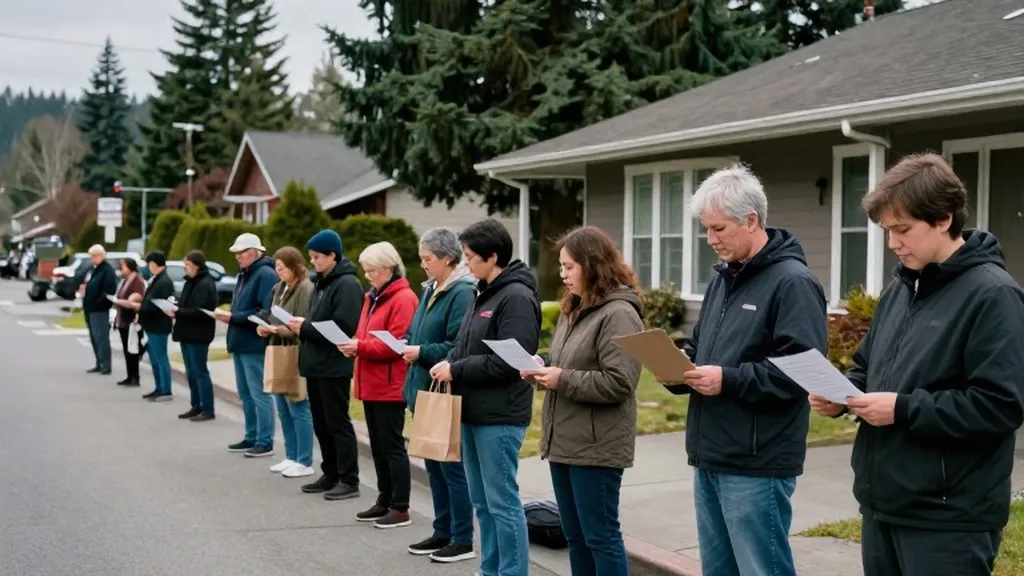
Voters in Whatcom County are heading to polling places or mailing ballots on Election Day, Tuesday, November 3, 2026, to decide the outcome of the midterm elections. In Washington, the election is conducted largely by mail, with polls remaining open until 8 p.m. Local time. Residents in Bellingham, Marysville, and Lake Stevens are casting ballots for every U.S. House seat in the state, as well as for state and local offices and measures that vary by county. There is no U.S. Senate or governor election in Washington this year.
The local ballot includes contests for the state legislature, the state supreme court, and intermediate appellate courts. Voters in the county are also weighing in on statewide ballot measures, including those related to public education governance and income taxes. The Associated Press notes that the election is being viewed as a referendum on President Donald Trump's second term, with many voters struggling with high prices. This national mood is influencing decisions in Whatcom County, where local races often mirror broader political trends.
Nationally, the focus is on the U.S. House of Representatives, where all 435 seats are up for grabs. Republicans currently hold 218 seats, Democrats hold 214, and there is one independent, with some vacancies. Democrats need a net gain of three districts to secure a majority, while Republicans can afford to lose no more than two. This three-seat margin makes the House control a razor-thin contest. Ballotpedia has identified 46 battleground districts, with 25 held by Democrats and 21 by Republicans. These districts are the primary areas where the outcome of the House will be decided.
The map for the House has changed in several states due to mid-decade redistricting. California, Florida, Missouri, North Carolina, Tennessee, and Texas are using new congressional maps, and Ohio also has a new map. These changes have altered the competitive landscape in key districts. Democrats are cautiously optimistic about their chances, while Republicans are bracing for potential losses. The new maps in seven states are a critical factor in the fight for the 218-seat majority, as they may not vote as originally drawn.
In the U.S. Senate, 35 of the 100 seats are on the ballot. This includes 33 regular elections and two special elections for the remainder of terms previously held by Marco Rubio of Florida and JD Vance of Ohio. Republicans hold 53 seats, Democrats hold 45, and two independents caucus with Democrats. Democrats need a net gain of four seats to take control of the Senate, while Republicans can lose only two. Eleven senators are not running again, creating open seats that add to the competitive nature of the race. The Associated Press highlights that one or two seats could tip the balance of power in either chamber.
More than 57 million people had already voted as of Monday, surpassing early vote totals from four years ago in many closely watched states. This high level of early voting is expected to continue into Election Day. The U.S. Postal Service has added hours, staff, and special lines to ensure that mail ballots are counted on time, a significant consideration for states like Washington that rely heavily on mail voting. This logistical effort is crucial for ensuring that every eligible vote is counted in the final tally.
In Whatcom County, the election is a chance for voters to express their views on local issues while participating in a national decision. The county's towns, including Bellingham, Marysville, and Lake Stevens, have active local races for municipal government. Ballotpedia indicates that municipal government elections are on the ballot in Washington. These local contests are important for community governance and often see high voter turnout in areas with strong local identities.
The mood among voters is shaped by economic concerns and political alignment. About 7 in 10 U.S. Adults say the country is heading in the wrong direction, and most blame President Trump for high prices. This sentiment is likely to influence votes in Whatcom County, where residents are dealing with the same national economic pressures. The election is a moment for voters to decide who controls Congress for the final two years of Trump's term, a decision that will have lasting effects on policy and governance.
As polls open and close throughout the day, voters in Whatcom County are making their final decisions. The race for the House is particularly tight, with the three-seat margin making every district crucial. The new maps in seven states add another layer of complexity to the national picture. In Washington, the absence of a Senate or governor race allows voters to focus on the House and local offices. The outcome of these elections will shape the political landscape for the next two years, with potential implications for investigations, oversight, and the 2028 presidential race.
If Democrats win even one chamber, investigations and possible impeachment proceedings become likely. House Democratic Leader Hakeem Jeffries has outlined a 100-day agenda on the cost of living and oversight if his party gains control. This potential shift in power is a key driver for voters in battleground districts. In Whatcom County, the vote is a local expression of these national stakes, with residents deciding the future of their representation in Congress and their local communities.
With polls closing at 8 p.m. In Washington, the final count will reveal which party controls the House. The three-seat margin means that the outcome could be determined by a handful of districts. The new maps in seven states have reshaped the competitive landscape, making the race for the 218-seat majority a closely watched contest. In Whatcom County, the vote is a chance for residents to have a say in these national decisions while also choosing local leaders. The election is a pivotal moment for the future of American politics, with voters in Bellingham, Marysville, and Lake Stevens playing their part in a nationwide decision.