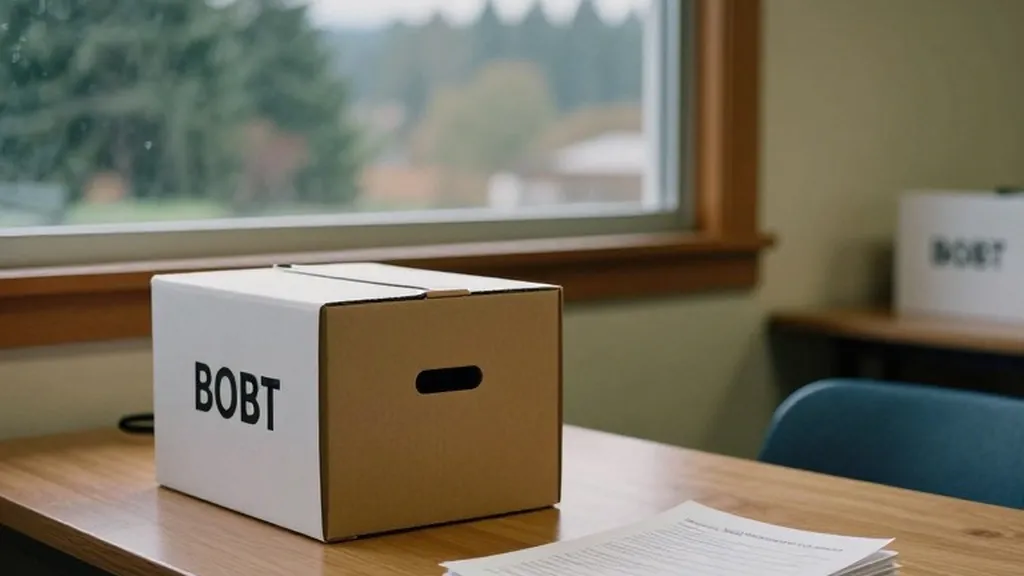
Whatcom voters head to polls for House and local measures
Washingtonians decide on congressional seats and state ballot measures while the state's governorship remains off the ballot this year.
By Michael Bennett ·
Voters in Whatcom County are heading to the polls or sending in their mail ballots on Tuesday, November 3, 2026, for the midterm election. In Washington, polling places close at 8 p.m., and the state conducts its elections largely by mail. Residents in Bellingham, Marysville, and Lake Stevens can check their specific polling place locations at vote.gov if they need to vote in person.
Washington does not have a U.S. Senate election or a governor election on the ballot this year. The state’s top federal race involves all U.S. House seats. Every U.S. House seat in the state is on the ballot, along with state and local offices and measures that vary by county. This means the focus for local voters is on who will represent their districts in the U.S. House of Representatives.
The state’s ballot also includes state legislative races and court elections. Ballotpedia confirms that state Senate and state House seats are up for election. Additionally, seats on the State Supreme Court and intermediate appellate courts are on the ballot. Municipal government positions are also being decided in various jurisdictions across the county.
Washington voters are also deciding on three statewide ballot measures. Initiative 1 concerns public education governance, specifically re-enacting a previous initiative related to parental rights to review educational materials and opt children out of sexual health education. Initiative 638 addresses sex and gender topics in school athletics, proposing rules for how biologically male and female students compete. Initiative 645 deals with income taxes, proposing to repeal the tax on household income over one million dollars and prohibit state and local taxes on individual income.
Nationally, the midterm election is described as a referendum on President Donald Trump’s second term. The Associated Press reports that voters are struggling with high prices and are angry over an unpopular war with Iran. AP-NORC polling indicates that 35 percent of U.S. Adults approve of Trump’s job performance, while about seven in 10 say the country is heading in the wrong direction. Most voters blame the president for high prices.
More than 57 million people had already voted as of Monday, surpassing the early vote of four years ago in many closely watched states. Republicans were bracing to lose the House and fighting to hold the Senate. Democrats were described as cautiously optimistic. The results will decide who controls Congress for the president’s final two years.
In the U.S. House, all 435 seats are up for election. Republicans hold 218 seats, and Democrats hold 214, with one independent and some vacancies. Democrats need a net gain of three districts for a majority, while Republicans can lose no more than two. Ballotpedia counts 46 battleground districts, with 25 held by Democrats and 21 by Republicans. In Washington, the 3rd Congressional District is a noteworthy race, with incumbent Suzan DelBene on the ballot for the Democratic Party and a Republican opponent.
In the U.S. Senate, 35 of the 100 seats are up for election. Republicans hold 53 seats, and Democrats hold 45, plus two independents who caucus with Democrats. Democrats need a net gain of four seats for a majority. There are no Senate elections in Washington this year. Key Senate battlegrounds include Georgia, where Senator Jon Ossoff faces Representative Mike Collins, and North Carolina, where former Governor Roy Cooper faces former RNC chair Michael Whatley.
Thirty-six governorships are on the ballot nationwide. Republicans hold 26 governor’s offices, and Democrats hold 24. Of the offices on the ballot, each party holds 18. Democrats would need a net gain of two governorships for a nationwide majority, which Republicans have held since 2010. Washington’s governorship is not on the ballot this year. In other states, Democrats are defending governorships in states Trump won in 2024, such as Arizona, Kansas, Michigan, Pennsylvania, and Wisconsin.
Election administration issues have been prominent this cycle. A federal judge temporarily barred the Trump administration from carrying out a plan to prevent noncitizen voting, and another judge ordered the administration to stop demanding that California election officials segregate ballots cast by people on its lists of suspected noncitizens. The U.S. Postal Service added hours, staff, and special lines to ensure mail ballots are counted on time.
The 2026 elections are likely to be the most expensive in history. Republican committees outraised and outspent Democratic committees, helped by Trump-affiliated groups and Elon Musk. At the candidate level, however, Democrats outraised their opponents. Republican general election TV ad spending was heavily concentrated in states and districts Trump won in 2024, with 88.1 percent of spending going to those areas.
If Democrats win even one chamber, investigations and possible impeachment proceedings become likely. House Democratic Leader Hakeem Jeffries would be the first Black speaker if Democrats take the House. A strong Democratic night would also boost potential 2028 candidates. Republicans tried to beat the midterm pattern with redistricting, but new districts in Florida and elsewhere may not vote as drawn. Wall Street is watching the results for signals on investor concerns about AI spending and debt ceiling negotiations.
Voters in Whatcom County can cast their ballots until 8 p.m. Today. Anyone in line when polls close is entitled to vote. The outcome of these races will shape the balance of power in Congress for the next two years and influence the direction of national policy on issues ranging from the economy to foreign affairs.