Whatcom voters weigh mail ballots as 13 Senate races decide control
As polls close at 8 p.m. In Bellingham and Marysville, the fate of the U.S. Senate hinges on 13 closely watched states and the national mood.
By Sofia Ramirez ·
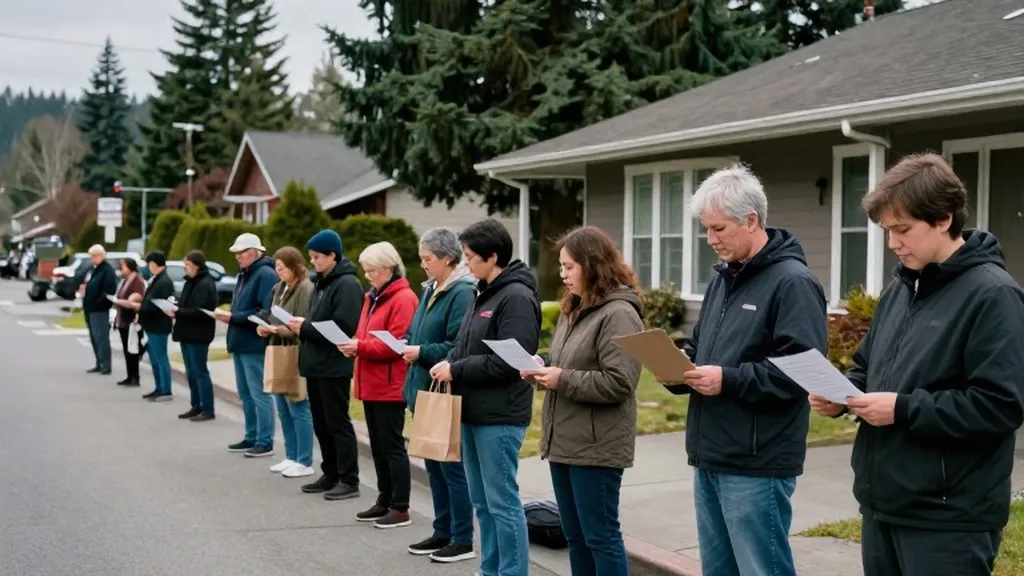
Voters in Whatcom County are casting their ballots on Tuesday, November 3, 2026, in an election that defines the balance of power in Washington for the next two years. The state has no U.S. Senate or governor races on the ballot this year. However, every U.S. House seat in Washington is up for grabs, along with state legislative seats, appellate court judges, and local offices in towns like Bellingham, Marysville, and Lake Stevens. Washington conducts its elections largely by mail, and while specific poll opening hours vary by location, polls close at 8 p.m. Local time. Residents can find their specific polling place details at vote.gov or through their local election office. Anyone in line when polls close is entitled to vote, and voters should check state ID rules before heading out, as requirements can vary.
The national stakes are high as the country heads into the midterm elections, halfway through President Donald Trump's second term. The Associated Press describes this contest as a referendum on the president's performance, with voters grappling with high prices and anger over an unpopular war with Iran. AP-NORC polling indicates that 35% of U.S. Adults approve of Trump's job performance, while 25% approve of his handling of the economy. About seven in 10 respondents say the country is heading in the wrong direction. More than 57 million people had already voted as of Monday, surpassing early vote totals from four years ago in many closely watched states. The results will determine who controls Congress for the president's final two years in office.
Thirty-five of 100 U.S. Senate seats are up for election, including 33 regular elections and two special elections for the remainder of the terms held by Marco Rubio in Florida and JD Vance in Ohio. Republicans currently hold 53 seats, while Democrats hold 45, plus two independents who caucus with the Democratic party. Democrats need a net gain of four seats to secure a majority, whereas Republicans can afford to lose only two. Eleven senators, including four Democrats and seven Republicans, are not running again. Winners of these races will begin their six-year terms on January 3, 2027. The Associated Press notes that one or two seats could tip the balance of the chamber, making the 13 battleground races particularly critical.
Ballotpedia identifies 13 Senate races as battlegrounds, where the outcome remains uncertain. These include races in Alaska, Florida, Georgia, Iowa, Kansas, Maine, Michigan, Montana, Nebraska, New Hampshire, North Carolina, Ohio, and Texas. In Maine, a state where former Vice President Kamala Harris won by 6.9 points in 2024, the race between Republican Senator Susan Collins and Democratic former state Senate President Troy Jackson is rated a toss-up by all four major ratings groups. The Associated Press notes that economic strain and tariffs have made the state competitive. In Alaska, where Donald Trump won by 13.1 points in 2024, the race is rated a toss-up to lean Democratic, and the Trump administration has filed a lawsuit related to the certification of the result.
Other key matchups include North Carolina, where Democratic former Governor Roy Cooper faces former Republican National Committee chair Michael Whatley for the seat vacated by retiring Senator Thom Tillis. In Georgia, Senator Jon Ossoff is running against Republican Representative Mike Collins in a state that Trump won by 2.2 points in 2024. The race in Michigan is also close, with Republican former Representative Mike Rogers facing Democrat Abdul El-Sayed. On Sunday, El-Sayed's former primary opponent Haley Stevens endorsed Rogers. In Texas, Republican Attorney General Ken Paxton, whom Trump backed over Senator John Cornyn in the primary, is competing against Democrat James Talarico. These races are pivotal because Kansas, a reliably Republican state, has become central to the fight for Senate control, with the race there rated a toss-up to lean Republican.
Beyond the Senate, 36 governorships are on the ballot, with Republicans holding 26 offices and Democrats holding 24. Democrats need a net gain of two governorships to achieve a nationwide majority, a position Republicans have held since 2010. The Associated Press identifies competitive races in Georgia, Nevada, and Ohio. In Georgia, Republican health care executive Rick Jackson is challenging Democratic former Atlanta Mayor Keisha Lance Bottoms. In Nevada, Republican Governor Joe Lombardo is facing Democratic Attorney General Aaron Ford. In Ohio, Vivek Ramaswamy is running against Amy Acton, with Ramaswamy's campaign facing backlash over an ad featuring Acton's estranged mother. Democrats are hoping to hold a majority of governorships for the first time in two decades.
The U.S. House race involves all 435 seats, with Republicans holding 218 and Democrats holding 214. Democrats need a net gain of three districts to achieve a majority, while Republicans can lose no more than two. Ballotpedia counts 46 battleground districts, with 25 held by Democrats and 21 by Republicans. The Associated Press notes that Republicans were bracing to lose the House and fighting to hold the Senate. Democratic House Leader Hakeem Jeffries, who would be the first Black speaker if Democrats win, has outlined a 100-day agenda focused on the cost of living and oversight. A strong Democratic night would also boost potential 2028 candidates such as Gavin Newsom, JB Pritzker, and Pete Buttigieg.
Money is playing a significant role in this election, which is likely to be the most expensive in history. Republican committees have outraised and outspent Democratic committees, helped by Trump-affiliated groups and Elon Musk. However, at the candidate level, Democrats have outraised their opponents. An analysis of AdImpact data shows that 88.1% of Republican general election TV ad spending went to states and districts that Trump won in 2024. This included more than $850 million spent in areas where he won by 10 points or more. The distribution of funds reflects the strategy of consolidating support in Republican-leaning areas while contesting the battlegrounds.