Midterm campaigns deploy AI chatbots to text millions of voters
New data shows AI agents can shift opinions more effectively than video ads, though accuracy drops as bots push harder.
By James Mitchell ·
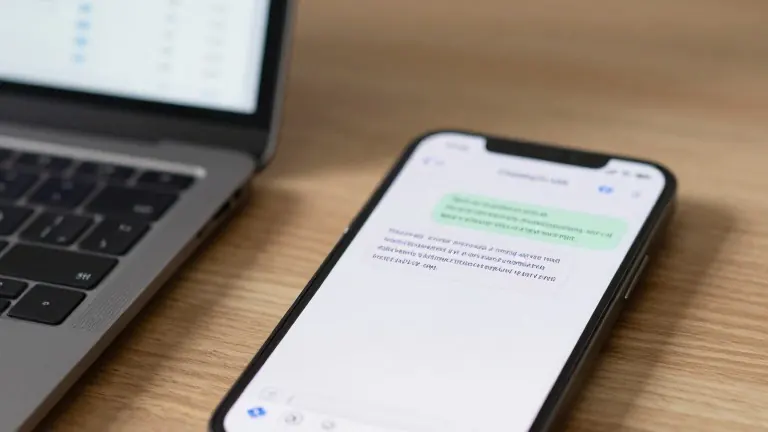
Voters in West Virginia and other swing states are increasingly receiving campaign outreach via automated text messages. These conversations are handled by artificial intelligence agents rather than human staffers. The technology allows political campaigns to engage thousands of constituents simultaneously. This shift marks a departure from traditional door-to-door canvassing and mass media advertising.
The adoption of this technology accelerated during the 2024 election cycle. Researchers published findings in the journal Nature in December 2025. The study analyzed chatbots used in the 2024 U.S. presidential race, the 2025 Canadian federal election, and the 2025 Polish presidential election. In the U.S. experiment, 2,306 citizens participated. The median conversation lasted six minutes. Participants were informed they were speaking with AI.
The data indicates that policy-focused AI conversations can influence voter sentiment. Pro-Democratic chatbots moved Republican supporters nearly four points on a 100-point scale toward the Democratic candidate. Pro-Republican chatbots moved Democratic supporters 2.3 points toward the Republican candidate. This effect was roughly four times larger than the impact of video ads in previous cycles. The persuasive effect faded over time. Follow-up surveys conducted more than a month later showed that slightly more than one-third of the initial impact remained.
A companion study in the journal Science tested 19 large language models with 42,357 participants in Britain. The researchers conducted more than 91,000 conversations across 707 political issues. The study found that models become less accurate when instructed to be more persuasive. Simply instructing the model to list facts and evidence produced the most effective results. This approach outperformed moral reframing and storytelling techniques.
Political firms are deploying these agents at scale. Vector Political, a Democratic consulting firm, sent over 3 million text messages this cycle. These messages led to more than 35,000 individual conversations. Marty Santalucia, a partner at Vector, stated that 10% to 20% of respondents who reply stay in the conversation for at least an hour. The firm uses a secondary bot to verify the primary agent's answers to reduce errors.
Convos.ai, another provider, assigns a score from 0 to 100 to each voter. A score of 0 indicates strong opposition, while 100 indicates strong support. Campaigns use these scores to determine follow-up strategies. Ace Parsi, a Democrat running against Republican Rep. Riley Moore in West Virginia, received full transcripts of these chats. His campaign manager, Monica Biddix, confirmed that the team analyzes every conversation. Parsi said his team called every voter who expressed concern about using AI.
Regulatory standards for this technology remain sparse. Most states do not require campaigns to disclose that a texter is an AI agent. Privacy questions persist regarding how campaigns store and use the personal information shared in these chats. Katie Harbath, CEO of Anchor Change, described the technology as being in an experimental stage. Campaigns continue to test the tool as they approach the November election.
The technology offers a method to reach voters who avoid physical canvassing. Jessica Alter, co-founder of Tech for Campaigns, argued that campaigns should listen to voters who prefer digital communication. The current cycle serves as a large-scale test of this method. Campaigns will analyze the data collected from these interactions to refine their final weeks of outreach.
More Business · Buyer Beware · Report a business · Got a Story?