DEA Registers 900 Medical Dispensaries, Unlocking Tax Deductions
Registrations issued Friday to shops in seven states could allow businesses to deduct rent, labor, and advertising costs on federal taxes for the first time.
By Sofia Ramirez ·
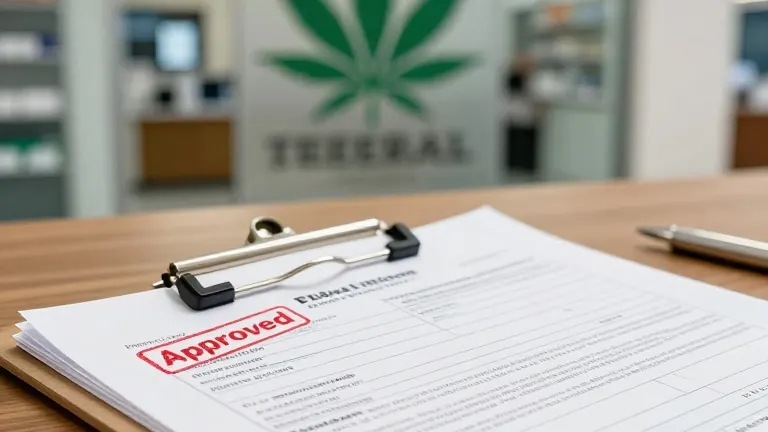
The U.S. Drug Enforcement Administration issued registrations to more than 900 state-licensed medical marijuana dispensaries for the first time on Friday. This move follows President Donald Trump’s order to reschedule the drug and opens the door for industry participants to claim tax benefits that were previously out of reach.
The Justice Department confirmed that the initial group of approved businesses operates in Alabama, Florida, Mississippi, South Dakota, Texas, Virginia, and West Virginia. The agency did not release the specific names of the registered entities. Attorney General Todd Blanche stated that the regulated distribution of medical cannabis from these shops “will help ensure broader access to chronic pain treatment and the safety of the American people.”
Blanche signed an order in April that moved state-licensed medical marijuana from Schedule I to Schedule III. Schedule I is reserved for substances with high abuse potential and no accepted medical use, such as heroin. The reclassification legitimized medical programs in the 40 states that have adopted them. It also created an expedited registration process for producers, manufacturers, and distributors. Businesses must pass a pre-registration investigation and maintain specific security, recordkeeping, and inventory controls to handle controlled substances.
The change in federal status carries direct financial weight. State-licensed cannabis businesses historically could not deduct ordinary business expenses, including rent, labor, and advertising, from their federal taxes. This limitation stemmed from the drug’s previous Schedule I status. Many operators described this tax burden as financially crippling. The new registrations are expected to allow these entities to claim those standard deductions.
DEA data published on Friday shows that nearly 7,000 other dispensaries, manufacturers, and distributors across the country have applied for similar registration. Steph Sherer, founder of Americans for Safe Access, noted that the approvals arrived just days before the 30th anniversary of California legalizing medical marijuana. “For the first time, the federal government is recognizing and registering the medical cannabis dispensaries that patients fought to establish,” Sherer said.
Uncertainty remains regarding how the DEA will regulate the newly registered entities. State laws often allow individuals with certain criminal histories to run licensed marijuana businesses, a flexibility that may not carry over to federal oversight. Additionally, many states have merged recreational and medical markets. It is unclear how the agency will treat businesses that handle both adult-use and medical cannabis. Chris Lindsey, vice president of policy at the American Trade Association for Cannabis and Hemp, said the industry is now watching to see what operational requirements the agency will impose.
Twenty-four states and Washington, D.C., have authorized adult recreational use of marijuana. Forty states have medical marijuana systems, and eight others permit low-THC cannabis or CBD oil for medical purposes. Only Idaho and Kansas ban the drug entirely.
More Business · Buyer Beware · Report a business · Got a Story?