Arab-led parties win 19 seats after record turnout in Israel
Palestinian citizens of Israel voted in record numbers, blocking Benjamin Netanyahu's coalition from forming a government and forcing complex coalition talks.
By James Mitchell ·
Israeli elections concluded with neither major bloc securing the 61 seats required to govern, leaving Arab-led parties in a pivotal position for coalition building. The outcome follows a surge in voter participation among Palestinian citizens of Israel, a demographic that has historically abstained from voting due to feelings of marginalization. This shift in political dynamics has intensified debates over the state's identity and the role of its Arab minority.
Arab-led parties captured 19 of the 120 seats in the Knesset. This represents a 64 percent increase in votes compared to the previous election cycle, according to the Central Elections Committee. Neither Prime Minister Benjamin Netanyahu's far-right coalition nor his main challenger Gadi Eisenkot's center-right opposition reached the necessary majority. The 19 seats held by Arab parties are now the deciding factor in determining who will lead the next government.
Jamal Zahalka, chairman of the High Follow-Up Committee, described the result as a historical achievement for the community. "We blocked the government of Netanyahu from continuing," he said. "I think our community found its strength." Many residents of the Palestinian-majority town of Kufr Qasim attributed the high turnout to a desire to counter rising discrimination since the October 7, 2023 attacks. Intisar Sarsur, 65, noted that her family members all participated. "There is no freedom anymore," she said. "We are seeking for our basic rights as human beings."
The reaction from the political right has been sharp. Netanyahu called the turnout an "emergency" on election day, while National Security Minister Itamar Ben Gvir urged voters to ensure the country remains Jewish and Zionist. Likud subsequently claimed Arab parties had stolen the election through bribery and forgery, though police found no basis for these claims and election officials confirmed the process was proper. The head of the elections committee asked the Shin Bet to investigate suspected foreign funding of turnout efforts, but the attorney general stated the results were not compromised.
Eisenkot, a former military chief of staff, faces a difficult path to power. His party needs a partner, but his hawkish reputation and the loss of his son in Gaza complicate alliances with Arab parties. The Joint List, which won 11 of the 19 Arab-led seats, has stated it will not formally join his government but may support it from the outside. In contrast, the conservative Islamist party Ra'am campaigned on entering a coalition and placed a Jewish former police official second on its list. President Isaac Herzog is currently consulting with parties to decide which candidate receives the mandate to form a government.
Herzog is expected to announce the mandate recipient next week. The chosen candidate has 28 days to form a coalition, with the option to request a two-week extension. If they fail, a second candidate receives 28 days without an extension. If no government is formed, Israel will hold repeat elections next year. In Kufr Qasim, Mansour Shaaban, 33, said he would vote again immediately to combat racism. "Even if we don't succeed to create change this time," he said, right-wing politicians now know Palestinian citizens have found their voice.
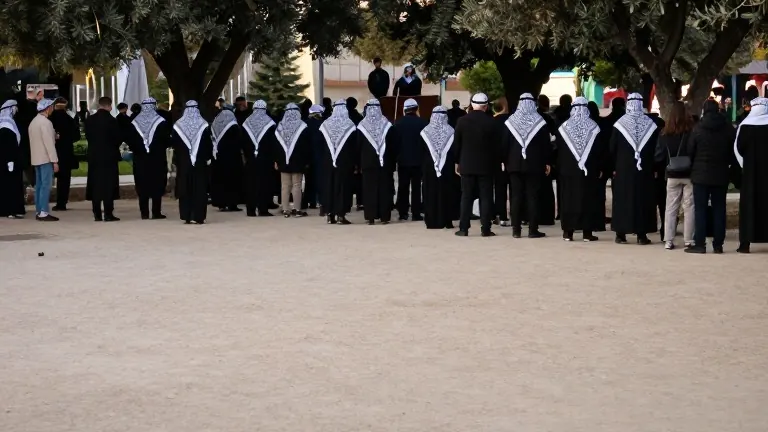
The political uncertainty coincides with annual commemorations in Kufr Qasim for residents killed by border police in 1956. Crowds gathered in the town's park to mourn those lost and to mark the suffering of Palestinians in Gaza and the West Bank. Speakers noted that 70 years after the Suez Crisis, the story of Palestinian identity in Israel remains unresolved. The election results have placed this long-standing question at the center of current governance negotiations.