EU chief calls Lavrov's G20 claims lies as photo op is cancelled
European officials skipped the standard group picture with the Russian foreign minister, while Washington approved a $2.1 billion missile sale to Kyiv.
By Sofia Ramirez ·
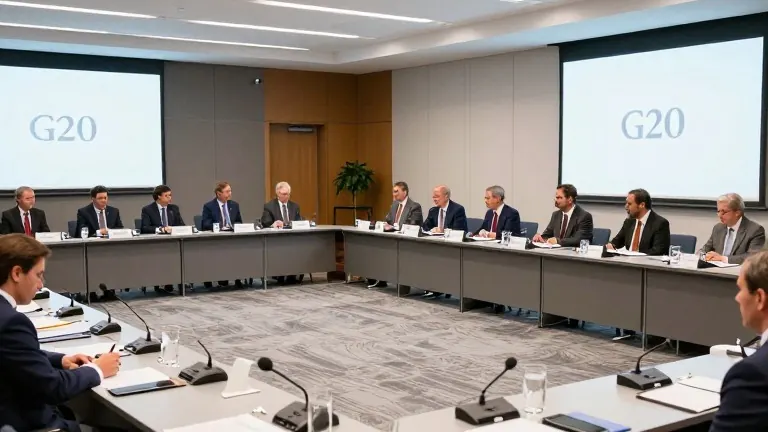
The G20 meeting in Atlanta opened with a diplomatic friction that led to the cancellation of the traditional ministerial group photograph. European officials objected to standing beside Russian Foreign Minister Sergei Lavrov, who remains under international sanctions. UK Foreign Secretary Ed Miliband stated that Britain does not engage with Russia in that manner. German Foreign Minister Johann Wadephul explained that there is no normality with Russia.
EU Foreign Policy Chief Kaja Kallas accused Lavrov of presenting false narratives during the talks. She told Agence France-Presse that Russia put forward many lies regarding the geopolitical crisis. Kallas argued that Moscow is not ready for peace negotiations because its recent actions contradict its words. She noted that July, August, and September were the deadliest months for Ukrainian civilians.
The G20 agenda focuses on global economic growth, energy security, and trade. European delegates pushed Russia to secure a ceasefire in the Black Sea, a key corridor for agriculture exports. Lavrov rejected the proposal and criticized European leaders for an arrogant boycott. He praised the willingness of the administration of US President Donald Trump to engage with Moscow.
US Secretary of State Marco Rubio held a brief discussion with Lavrov on the sidelines. The Russian minister described the conversation as decent. This meeting occurs ahead of fresh negotiations between Moscow, Kyiv, and Washington scheduled for November. Trump has invited President Vladimir Putin to Florida in December and has eased some sanctions while promoting a deal for Russian diesel sales.
On the defense market, the State Department approved the sale of 500 Patriot missiles to Ukraine for an estimated $2.1 billion. The approval now goes to Congress for review. Ukrainian President Volodymyr Zelenskyy warned that deliveries could take years. Two people briefed on the decision said the missiles are not yet manufactured and are not expected to arrive until a couple of years into the 2030s.
Zelenskyy suggested that allies could provide stockpiled missiles immediately to address the urgent danger. He asked American partners to find a solution for the current need for PAC-3 interceptors. Patriot systems are critical for Ukraine to intercept Russian drones and missiles.
In a separate humanitarian development, a joint relief operation evacuated residents from the besieged city of Oleshky in southern Ukraine. This was the first such operation in four years and eight months of war. A convoy brought food and medicine to the city, which has suffered months of shortages. US First Lady Melania Trump said the convoy could safely evacuate more than 750 people.
More Business · Buyer Beware · Report a business · Got a Story?